
Pre-Construction: From The Inside
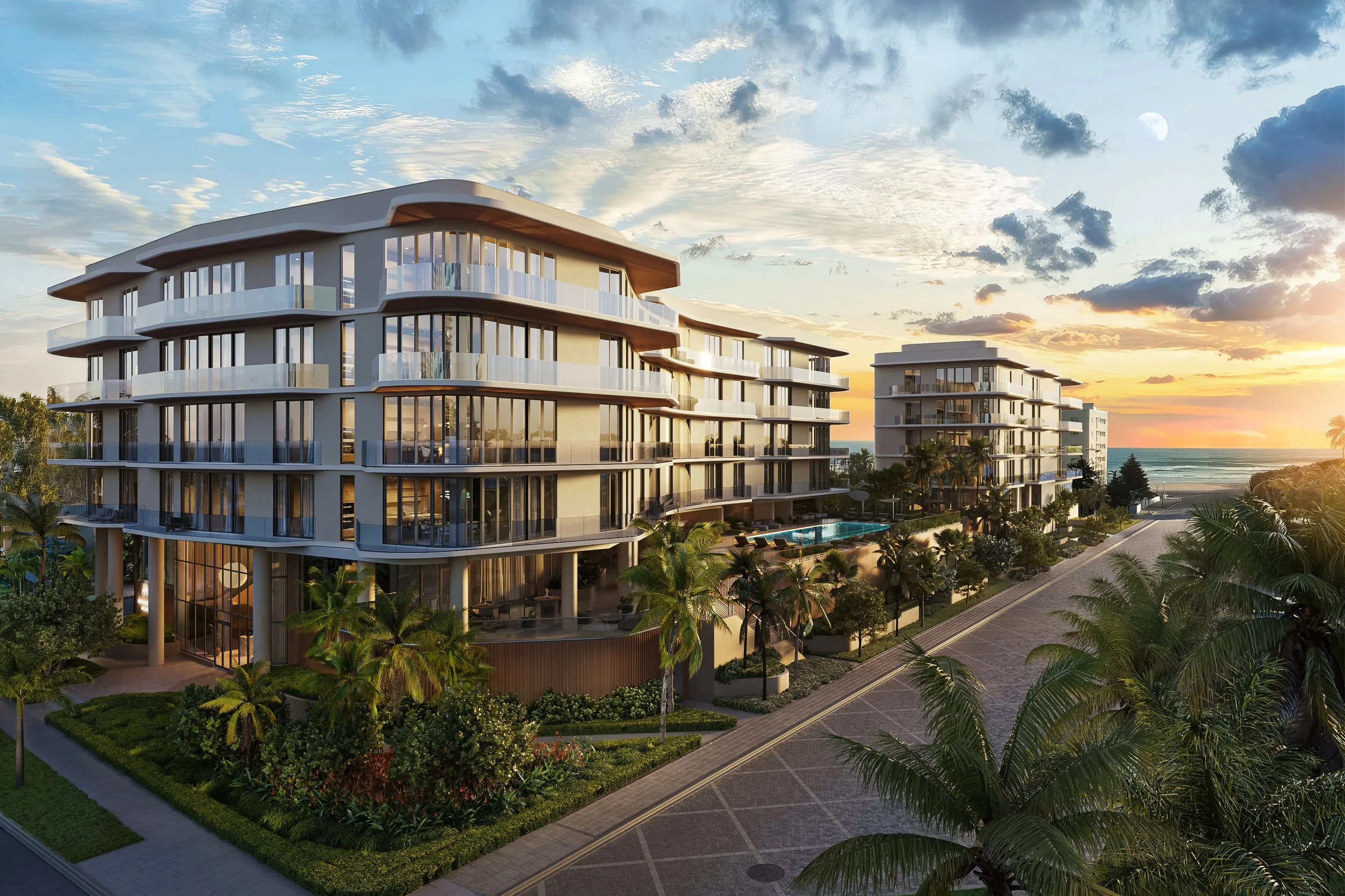
/Over the past four months, serving as Director of Sales at Hollywood Moon Residences has been an exercise in precision, adaptability, and execution under pressure. What began as a consulting role quickly evolved into full operational responsibility for the sales gallery, team performance, marketing alignment, and ultimately, revenue generation. This period has not only defined the early trajectory of the project, but also reinforced what it takes to bring a boutique luxury development to market in a disciplined and effective way.
When I first became involved, the foundation was not where it needed to be. There was a disconnect between vision and execution, and a lack of cohesive systems guiding the sales process. The opportunity was clear, but the pathway to converting that opportunity into contracts required immediate structure. My role shifted quickly from advisor to operator, with a directive that was simple in concept but complex in execution: stabilize, build, and produce results.
The first phase was listening and assessment. December was spent understanding the dynamics between the developer, the prior marketing team, and the in-house sales staff. It became evident that while there was effort, there was no unified framework. Lead management lacked discipline, messaging lacked consistency, and the sales environment itself was not operating at the standard expected for a luxury product. Without these fundamentals, even strong interest cannot translate into transactions.
January marked the transition from observation to implementation. Systems were introduced across the board. Follow Up Boss was positioned as the central nervous system of the operation, not just a database. Every call, every text, every interaction became a recorded and trackable data point. This created accountability within the team and, more importantly, provided clarity on what was actually happening with our pipeline.
We redefined the language of the sales process. A lead was no longer treated as an opportunity by default. Instead, we introduced a structured progression from Lead to Prospect to Customer, each with defined criteria. This ensured that time and energy were allocated appropriately, focusing on qualified buyers rather than activity for the sake of activity. It was a shift from reactive to intentional selling.
At the same time, we addressed the sales gallery itself. A luxury project requires a luxury experience, and that experience must be consistent. From presentation flow to visual materials, from how tours were conducted to how follow-up was handled, everything was refined. The goal was to create an environment where a buyer could clearly understand not just the product, but the lifestyle and long-term value associated with Hollywood Moon.
February was where the groundwork began to produce measurable results. With systems in place and the team aligned, the focus turned fully to sales execution. Training became a daily priority. Not theoretical training, but practical, scenario-based work that addressed real conversations happening with buyers. Objection handling, positioning of value, and understanding buyer motivation were all sharpened.
The results followed. Two firm sales were secured, with a third nearing completion. In a pre-construction environment, particularly one that is repositioning itself, these are meaningful indicators. They validate not only the product, but the process behind how it is being presented and sold.
Beyond the internal sales structure, a significant component of the past three months has been the repositioning of Hollywood Moon in the marketplace. The introduction of the EB-5 program represents a strategic shift that expands the buyer pool globally. This is not simply an additional marketing angle. It changes the conversation entirely. Buyers are no longer evaluating only a real estate purchase. They are evaluating a pathway to U.S. residency combined with ownership in a boutique oceanfront development.
This requires a different level of communication and a different level of responsiveness. One of the immediate changes I pushed for was speed. Inquiries should not sit. Our standard is to respond within one business hour. In a competitive global environment, responsiveness is not a luxury. It is a necessity. Every delay introduces risk of losing the lead entirely.
At the same time, we have been deliberate about how we position value. Hollywood Moon is not a high-volume project. It is a 48-unit boutique development on a barrier island where future supply is extremely limited. That scarcity must be communicated clearly and consistently. Pricing, incentives, and deal structures are all tools, but they must be used strategically. Overuse or inconsistency undermines credibility.
Another critical component has been aligning expectations between the developer and the sales team. Transparency is essential. Sales performance cannot be evaluated in a vacuum. It must be tied to marketing quality, lead flow, and operational support. By creating clear reporting structures and maintaining open communication, we have been able to identify what is working and where adjustments are needed in real time.
The past three months have also reinforced the importance of having the right people in the right roles. Sales is not just about personality. It is about discipline, consistency, and the ability to execute a process. Part of my role has been to advocate for the team where appropriate, while also holding a high standard for performance. That balance is critical in building a culture that produces results.
Looking forward, the focus remains on scaling what is now working. The foundation is in place. The systems are operating. The messaging is aligned. The next phase is about increasing velocity without compromising quality. This includes expanding reach through more targeted marketing, leveraging the EB-5 program more aggressively, and continuing to refine the sales process based on real-world feedback.
Serving as Director of Sales at Hollywood Moon over the several three months has required a willingness to step into uncertainty and create structure where it did not exist. It has required long hours, difficult conversations, and a constant focus on execution. But it has also been an opportunity to build something meaningful from the ground up.
At its core, this experience reinforces a simple principle. Success in real estate development sales is not accidental. It is the result of deliberate systems, disciplined execution, and a clear understanding of both the product and the buyer. When those elements are aligned, results follow.
